Is there a system as such that has been tested? One question I have is, how do they make sure that the battery pack you get is at 90%+ of max charge? That is... how do I know that the battery I'm getting isn't worn out and no longer get me my rated range?
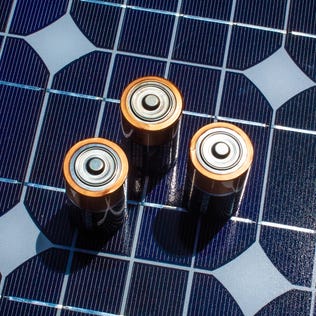
Before you answer, let me clairify. Like a PDA battery that has been used for a long time, that battery will no longer get the rated 10 hours of service, but the charger will not know the difference.
So let us say that my electric car is rated at 100 miles a charge. If I go to the station and swap out my battery one day, the battery I get back, might be worn out. I might only get 60 miles out of it, and there's no way of knowing that at station. I do not know of a way to test for that, and the station would only know that the charger said it was charged up. I can see that as being a drawback.
Other than that, by all means. If there's a market for this electric car, then feel free to sell them. I have no interest, but if others do, go for it.
Your last comment was rather dippy. You clearly are not smart enough to realize that the situation in Israel is way different than here. Everyone, and I mean EVERYONE knows solar can work. How many haven't used or seen a solar powered calculator? No one thinks solar can not work.
Knowing something isn't pratical is way differnet than knowing it can work. First, Israel uses 6.5 GigaWatts... that's for the whole fr**kin country. The US consumes 425 GW of power. Point being, solar energy has a very real ability of making a difference in Israel, whereas it's not every a fraction of a drop in the bucket to the US.
Further, Israel has very little if any natural resources of it's own. The cost of power and all forms of energy is high because they have to import everything. This makes solar energy more practical, because the conventional forms of power are expensive. Just ask people in California who purchased solar panels. If it wasn't for the State subsidizing (aka taxing money from the poor to pay for solar panels for the middle and upper class) they would have never bought them.
Finely maybe you haven't been to Israel, but it's a bit sunny there. Just a tad bright and hot ya know? Sorta like being in a desert. Yes I'm being humorous. It's a hot dry sunny place. When you have that much sun, you can make a pretty goodly amount of power from a solar array. But most of us in the US have days we can define as "cloudy" and that doesn't work well when your power is dependent on "sunny".
My point here is, Solar energy is in fact impratical for much of the US. I do not have 1 sq/mile of desert around my house with sun shine 355 days a year to power my home. Israelis do. Now in the situations that solar power makes sense in the US, we are using it.
But for me, I'm not retro-fitting my home with solar panels. The cheapest panel makes about 926 Watts an hour. The sun would hit it roughly 5 hours a day summer time, and 3 in the winter, averaged to about 4 hours a day yearly. That's 3.7 KWh a day. Then about half of those days are rainy or cloudy in Ohio. We almost never have a sunny winter day, and spring is the rainy season, so mid summer and fall are about it. That's 673 KWh a year, and I'm being generous.
At 9.6 Cents, the standard rate here, that's $65 dollars saved a year.
And the cost of the system? $9,000. That NINE THOUSAND. If I install it today, 139 years from now, it'll pay for itself. I'd be a complete idiot to do that. Even if I assume it's sunny year round, it still would only save about $130 a year, meaning it would take 70 years to pay off. People only live 70 years on average. Now if that doesn't define what "impractical" means, I don't know what does. But if you want a solar panel, there are places that sell them, by all means blow your money. I don't have 9 grand laying around to buy a system that I'll be dead before it pays for itself.
Now if I was in Israel, and electricity costs a ton more (which it does) and if I had 355 sunny days a year (which they do), then yeah a solar pannel makes good sense.
Was this reply helpful? (0) (0)
Staff pick