Answer:
There are a number of ways to get your PC to play TV. Which way you go for depends on various things like how much you want to spend, whether you want digital tv included, how good a picture quality you want, whether you want to make your computer into a TIVO box, etc.
So let's have a look at a few solutions.
Firstly the software that says you can turn your PC into a TV without an additional card. Sounds too good to be true? well that's probably because most of the time it is. TV without a card usually uses one of two different methods. The first method is to sell you a similar service to RealPlayer. TV through the internet, this however has a number of problems. Firstly you have to pay a monthly subscription which is usually twice that what you pay for normal TV, secondly you use up a lot of your internet bandwidth so either other programs like file sharers will slow down or more commonly the video will jerk whilst playing, and thirdly your very limited to what you can watch, most of the time it's music videos or Big Brother.
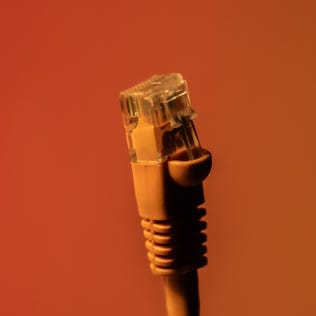
The other method that some software tries is use a hole on your computer as an ariel, like an ethernet port, and try and receive the channels with that, then decode them all with a software decoder. This is open to many problems, the main one being interference, and the other being the amount of processing time it takes up. Software only TV reception is a poor solution and should be evaded.
So now we've covered the non-TV boards lets move onto the TV boards..
Getting a dedicated TV board is certainly the best option. From here on you need to be basing your decision on your requirements
Firstly in video card land for PC's there is one main manufacturer, Hauppauge, these are to video like what Creative are to soundcards. There are also a few other minor manufacturers as well.
One of the most important things to consider with TV cards is shielding. A good card should either be outside the computer case (USB) so it can be moved away from the electronic emissions in the PC or very well shielded, especially if you intend to take programs straight from RF (not through a satellite, cable or video), because if it's not very well shielded you wont get very much unless you move to the house next door to the transmitter. If you are using a video, satellite or cable box to plug into your PC for the best quality picture you will need to plug them in via an S-Video or RCA (Yellow phono) sockets. These are a lot less prone to interference than RF and produce a far better picture. If your satellite, cable or video box only has scart outputs you can easily get a cable to go scart to S-Video or RCA
After you've decided how your going to plug your box in you then have the fun choice of what you want it for.
If you want a card just to watch TV through RF, you should be fine with a very basic USB TV card, like Hauppauge's USB-TV:
http://www.hauppauge.com/pages/products/data_usb.html
If you want to just watch TV through a satellite, cable or VCR box then you could also go for the USB-Live solution, which doesn't have any RF tuner in it, but just receives straight from s-video or RCA.
If you want to watch digital TV through your card without an extra box, you can get a TV card with DVB-T (Terrestrial Digital, Freeview in the UK) or DVB-S (Satellite Digital) built in, like the WinTV NOVA
http://www.hauppauge.com/pages/products/data_novatpci.html
however as digital TV is really prone to interference and works on an all or nothing deal it most probably would work out better to get a separate digital box.
If you want to watch all your shows in surround sound, get an AV receiver, have all the sound from your computer and TV boxes going into that, and have the TV out going to a basic TV card using RCA sockets. Don't try WinTV Theatre, I've got one and it was my biggest waste of money. If you want to do TIVO features, ensure the card you buy has a hardware MPEG encoder, not software as this will enable you to record everything in real time, like the Hauppauge WinTV PVR series.
Also there is an important decision to be made regarding audio. Some TV cards out there say they are Mono and some say they are Stereo. This only really matters if you are connecting the TV up through RF and not RCA or S-Video. If you are connecting it up through RCA or S-Video you will also have two more phono cables (usually black & white, or red and black or red and white). To get stereo TV out of any card just get a phono to 3.5mm adapter (which will probably come with the TV-card anyway, if not there only about 1 in Maplins) and instead of plugging the audio cable into the TV card, plug it straight into the line-in socket on your soundcard (usually blue). If the soundcard also comes with a pass-through cable to go from the TV card to the sound card, this does not need to be used, unless you decide later to watch TV through RF.
Hope this helps.
Submitted by: Jim S.
***********************************************************************
Answer:
There are two varieties of program in this category. The ones that say they don't require some sort of hardware interface are a waste of time and I do believe I read something not too long ago about that bit of software being loaded chock full of spyware and/or adware and being more dangerous than beneficial. Additionally, these programs that operate without locally installed TV hardware quite probably could run afoul of the MPAA mainly because they frown heavily on people having copies of their content. Just the other day, the MPAA was suing a cable company because they were rolling out a new Tivo free, on demand video service that stored shows on the cable company's servers.
The bottom line, you'll have to get some sort of hardware to get TV to show up on your computer.
The first thing to consider, then, is what sort of cable service (or dish service) you've got installed and how you plan on using it... You could use an antenna - pretty much any normal TV antenna would do, but you would be limited to broadcast TV channels. An external one is generally better than an internal antenna. Or you could simply get cable or dish service and have more channels available.
If you've got regular, plain analog cable, chances are you will only need to have the cable people come by and install a splitter and an additional line that leads to where you plan on having your computer set up. Unless you're an expert on cable hookups and such, it's best to have them do it for you. That way, should anything not work properly after the fact, they will need to come out and fix it.
Analog cable and digital cable, both requiring a box, will be about as complicated - though this will usually require adding a new cable box to the mix. Unless you're replacing an existing TV hookup, or are planning to use the computer as a Tivo like gadget, you'll need an additional cable box to convert the signal into something the tuner inside the computer will be able to handle - the same way your existing TV's tuner works. Be sure to look for a card that has what's known as an IR Blaster - basically, it's a feature that allows the PC and the TV software to control the cable box/dish's tuner. This is an essential feature!
And speaking of PC based tuners... There are a number of them available. My choice would be the Hauppauge WinTV500 MCE. While designed to work with Windows Media Center, it can be made to work with any version of Windows 2000 or XP. The reasoning behind getting this card instead of most of the others on the market - this one has two built in MPG processors and TWO tuners that requires only one cable drop. Of course, this is only of any value if you've got a direct connection to the cable feed (i.e. no cable box). With this kind of setup, you can easily record two different shows on two different networks or record one channel while watching another. With a more modern cable/dish hookup requiring a cable box, however, this card will only be as effective if you're recording two programs that are on the same channel. For a cable box/dish setup, you'd be just as well off with a WinTV 150 with only a single channel but it has the onboard MPEG processor.
You really do want a card with the onboard MPEG processor - the main reason behind this would be that it doesn't eat up CPU resources while you're recording. The encoding into MPEG is handled on the fly by the card instead of slowing your computer down unnecessarily.
If you've only got a laptop and want to record TV, there are a few USB options available. I would recommend the Hauppauge PVR-USB2 for this sort of project. It also has an onboard MPEG processor to encode your shows on the fly. This device requires a USB 2.0 port to make it effective.
Now then, on the software side of the equation, you've got a few options. Many of the cards on the market these days come with some sort of TV application that allows you to control the channels and which, if any, shows get recorded. Most of them are adequate for the task. My personal favorite would be Beyond TV. As far as features go, Beyond TV does pretty much anything and everything you could possibly need to watch and record your favorite shows. The above mentioned Hauppague USB device comes with a copy of BeyondTV as well.
As far as hardware requirements go... Pretty much any computer made in the last few years should be able to handle TV. Any computer with a 1 GHz or faster processor will do the trick provided you've got plenty of RAM installed. By "plenty" I mean at least 512 MB.
Should you start doing a lot of recording, you WILL need a rather large hard drive. The computer I use for this sort of thing has a pair of 250 GB drives. Typically recorded shows at the "better" setting, generally take up about 1.25 GB per 30 minute show. An hour long show will take about 2.5 or so. Also note, the drive MUST be formatted to NTFS. The old FAT32 file format will NOT support files over 4 GB. Really long programs - such as say, the opening or closing Olympics ceremonies - can take up to 10 - 11 GB disk space.
One side note - your computer will need to be left up and running should you be away from home and have a recording scheduled. None of the solutions out there have the ability to boot the computer on it's own before a scheduled recording.
Turning your PC into a PVR isn't as complicated as it may seem. It does require some additional hardware and a LOT of free disk space, but it's not hard to set one up make it work. I've had mine up for over a year now and it's been well worth the effort.
Submitted by: Rod T.
***********************************************************************
Answer:
John, I would suggest that if you wish to watch TV on your PC, that you use a "tuner" card and hook up cable, satellite, or a regular antenna to do so. There are a number of excellent tuner cards that you can choose from, along with a number of video cards that have tuner capabilities. There are everything from USB tuner systems to PCI video/tuner cards, along with PCMCIA tuner cards for laptops, with prices from $29.99 to $109.99 and up, it all depends on what you are looking for. Some of them come with the software and capability to record your video to your hard drive. Some of the manufactures are: ATI Technologies; Hauppauge; Pinnacle Systems; Diamond Multimedia; and Plextor to name but a few. These types of adapters give you actual TV type input and viewing capabilities.
I would suggest that you avoid all the software only TV options, as all that I have researched on the internet have turned out to be junk applications that dont actually work the way that they are advertised to. Most offer the ability to get 1000s of programs and radio and all without any extra hardware. Sound too good to be trueeverything that Ive seen so far says YES.too good to be true. From looking on feedback and review sites, more than half the people that have tried those applications (by several different names, but all the same type of software) have not even been able to get them to work, and most of the rest who have managed to get the software to work have not been able to see any programming that cant be found on the internet for free, without the software. Most of the programming that people have been able to find with the software are prerecorded old shows (not US TV programming), home style video, and foreign language videos. I have not found anyone who has found any current programming available by using these software packages. Also, the biggest complaint of these users have been that when they try to get the guaranteed refunds from the sellers of the software applications, they are ignored and never receive their money back.
All in all, it would seem to me that the hardware avenue is the best way to go, and that after researching, is the way I chose to go. I went with a Hauppauge WinTV card, and I love it. I can do anything from using my PC as a digital VCR (can pause live TV too! just like TiVo), it comes with a remote control, and I can watch from a variable sized window to full screen, and even pre-program the shows to watch during the day.
I hope this helps answer your question, good luck and good viewing.
Submitted by: Robert K.
***********************************************************************
Answer:
There are multiple things that can be considered "watching TV on your PC".
The two most common I've encountered are downloading television shows off of the internet from various websites, and then simply viewing them in a media player such as Windows Media Player (software); or using a TV Tuner Card (hardware).
On the software side, there are many websites on the internet that you can find which will offer episodes of television shows at discount prices, many of them easily found on google by searching "Download Television Shows". Even google features television shows for download on http://video.google.com. Also popular is the iTunes video service at http://www.apple.com/itunes/videos. With certain shows, even peer to peer file sharing networks may hold the answer, although you should always be wary of downloading things off these for a number of reasons.
On the hardware side, there exists many components allowing you plug coaxiel cables (either from satellite/cable TV/ Antenna) or A/V Cables into your computer, and then installing software which comes with the components to view the video.
The two major hardware components you can use for these are internal PCI Cards that you would install into your computer, or external TV Boxs that you would use with either USB for a Firewire Connection. The first one I used was an internal PCI card, WinTV ( http://www.hauppauge.com/) which has both internal and external boxes. Since I've got my laptop, I almost exclusively use my MSI Vox card, which comes bundled with MSIPVS software, as well as software for capturing video and creating DVD's or VCD's. Videomate, LeadTek, are also companies making video/television peripheral, some examples can be found here: http://www.thewebbeach.com/products.asp?id=132
Submitted by: Jason D.
***********************************************************************
Answer:
To watch tv on your pc, the types of options available are few - which can be a good thing. You essentially need one of two things; either a tv-tuner card of some sort or a video card which can capture output over S-Video, RCA, or whatever format your tv/vcr/cablebox/etc supports.
A tv-tuner card essentially decodes the analog signals (either over a regular antenna or the output of your receiver box or directly from your cable connection) and converts it to an mpeg or avi format on the fly. This is streamed to a media player on your machine which usually can act as a DVR box, recording the shows as you watch and allowing you to pause, rewind, or fastforward. Of course, this means you can also record entire shows. There are a variety of tuner cards available. There are PCI, USB, PCMCIA, Compact Flash, and probably a few more interface options which I'm not intimately acquainted. Since these devices usually do the video decoding themselves, the main bottleneck would be the method used to connect your tuner to your machine. For example, if you use a USB option and only have USB1.0 ports available, expect to see lower resolution video as the tuner card attempts to adjust for the available bandwidth.
Video capture cards (or just video cards with capture features) essentially work the same way as your VCR. They can grab video from a compatible source and display it on screen. These would usually be faster since your video card tends to have premium access to memory and processing power.
Other options include devices such as the slingbox. This nifty item makes your tv (or video device) available to you over the internet. Unlike the other devices where you can only watch tv from a nearby source, with the slingbox, you could watch your home tv programming even if you were in a hotel room five states away.
The offers you saw online which claimed to require no extra hardware are probably not true tv-to-pc. They're more like internet radio - they either generate their own content, or contract with content providers to create or make available internet broadcasts. While this is also something you may want to look into, from your question, it think you're more interested in watching "real" tv.
Submitted by: zboot
***********************************************************************
Answer:
If you are looking to watch live TV on your PC, I would suggest getting a hardware solution. Software solutions are typically portals to free Internet feeds that you probably don't really want to see or care to see. There are many manufacturers that make TV boards for the PC. These boards range in price from as little as $29 to as much as $499 or more. The hardest thing in deciding is how much you are willing to spend for the features the boards offer.
If you want the ability to JUST watch TV, then the lower end boards will typically serve your purpose. All the boards come with software to tune the TV and watch shows based on the type of antennae feed you provide. However, if you would like the ability for High Definition, Digital output, video capturing, live pause, fast forward, etc., then you will start to get into the higher end products.
A quality solution, which is a little more feature rich than what you are asking, would be to buy a TV Tuner card from Hauppauge. I personally have been using a Win-TV-PVR-500MCE for over a year and have had little problems and excellent performance. You do NOT need Windows XP Media Edition for this product to work as with some other solutions. The great thing about this product is with one antennae feed, cable, satellite, or free air, you get dual tuners. This provides you with the ability to watch one program and record another or simultaneously record two programs while not watching television.
Pair this board with the BeyondTV software product from Snapstream
(http://www.snapstream.com) and you have created yourself a PC/TiVo solution. Snapstream provides its customers a viewing guide which recording selections can be made without the cost of a subscription like a TiVo. You can also manually schedule times to record shows with great flexibility. Best of all this solution can be networked with other PC's in the house or connected to your home television and provide you with an excellent multimedia solution that enhances your overall television viewing experience. You can also watch your recorded shows and live TV on another PC or laptop without a TV tuner board installed.
For the cost of the Hauppauge board and software, your investment will be roughly $200. If you have a video card that supports dual output, then adding a second monitor to your system may provide you with additional convenience as you can place the television screen on one monitor and work on the other.
Hope this helps and good luck!
Submitted by: Ralph D.
***********************************************************************
Answer:
There may be a little "poetic license" in the software only solutions for watching TV on your PC.
To watch TV, you need three things, the input broadcast signal, a suitable tuner and an appropriate display setup. You may also need a decoder if you want to watch premium TV channels.
The signal can come from a number of sources, terrestrial aerial, cable, satellite, VCR/DVD player or streamed from the internet. The first three will require an external connection of some kind, aerial (antenna for the US guys) cable interface box or satellite dish. These sources, and VCR players usually supply the signal through a TV Coax cable, so you are going to require some kind of unit in or attached to your PC to accommodate the coax connection. Note these are not the same as coax network connections.
In principle, once you get the signal into your PC, you could use a software package to handle the tuning and decoding (if necessary). This can impose a fairly heavy load on the PC, which may degrade any other applications you happen to be running.
A better solution is to invest in a TV card, which will provide the tuning and decode functions and supply the required TV aerial connection and a software package to display the picture on the PC screen and handle the extras, such as teletext, where available. These days, most come with a remote control. If you have a desktop, you can get a PCI card to install inside the PC or USB versions are available for notebooks or PCs without an available slot.
I've been using a Hauppage Win TV USB unit for a few years to view analogue TV but I've just ordered a Freecom terrestrial digital (UK) USB unit. The Hauppage unit simply plugs into a USB port and supports the TV coax from either a terrestrial aerial or a cable box (not supplied). It comes with a software pack that allows the size and position of the picture to be set and includes a TV to hard disk recorder (saves as an MPEG file). This particular one doesn't have a remote, it displays a channel selector on the screen. The Freecom unit comes with the USB dongle, a fairly comprehensive software pack, a portable single stick aerial and a remote. These are both suitable for Windows XP or MCE and it's not too hard to make them work with Linux.
Current costs here in the UK, range from around 20 to 80 ($36 - $150
US) for mainstream units, then up to several hundred pounds for the more sophisticated models that can rival and exceed the capabilities of a Tivo box.
One thing to watch - read the minimum machine requirements carefully, especially the graphics card and screen - most of the TV cards will require DirectX 9 and a reasonable graphics memory.
Your other option is streamed video from the internet. You won't need anything more than comes with your Windows PC, for Linux, you need to ensure you have installed a suitable player. Many of the major TV stations provide streamed "broadcasts" through the internet and you can simply select the stream you want to view. Try http://www.bbc.co.uk if you can't locate a suitable site - they detect your connection speed (fast is above 256Kb/sec) and will play with either RealPlayer or Windows Media Player. You can certainly try this for free before you shell out any cash for the TV card solution, though in most cases, you won't get the full programme set.
A couple of reservations - the pictures from these streamed sources are usually not full screen, so if you want to watch the golf, for instance, the 3-4 inch window likely won't be good enough! Also it does chew up a fair amount of bandwidth - and if you are on a download capped broadband contract, you can soon hit some of the lowish limits (certainly in the UK). By contrast, the TV card solution is free of any restrictions, once you have bought the card.
Have fun!
Submitted by: Sav. M. of the United Kingdom
***********************************************************************
Answer:
TV on the PC
This could actually be a very lengthy discussion; however, I will attempt to sum up the highlights.
TV Into the PC
This can be done a variety of ways, most of which will require additional hardware. You mention some say none needed, but its very hard to be specific about them without letting us know which software you are looking for. I am sure there are options out there that can let you stream some media off the net, but most are going to require additional hardware to get your local channels into the PC. If you want to get your local channels into your PC then you will need additional hardware. You will need a tuner and capture card, typically this is a single card of which I will mention below. You have two options here. You can run your cable directly to the card and it will decode the standard free channels, just as if you were to connect the cable from your wall to your TV. You can also connect your Cable Box via S-Video and RCA to the capture card. You will also need an IR blaster like the USB-UIRT to allow the PC to change the channels on your cable box. This option will give you access to all channels you pay for and the ability to record them.
SDTV
The more popular choices for Standard definition TV capture are the Hauppauge devices, and my recommendation is the PVR500 or PVR150. Both of these devices are hardware encoders, which means they capture the TV signal and convert it to MPEG 2 format. This takes a lot of work off the CPU, and leads to a more enjoyable experience.
HDTV
If you are looking to capture HDTV then you are among many; however, with the lack of HD content in most areas and a lot of cable companys desires to prevent us from recording this material, the ability to do so has been slow in coming. You have a few options. A lot of cable boxes have firewire outputs for video, this can be used with certain software to capture HD content at full HD quality; however, this isnt the easiest process and isnt totally automated and user friendly. The next best bet is an OTA HD Tuner card like the DVICO Fusion HDTV5. Basically this card will capture Over The Air HD signals, and as this implies you will need an HDTV antenna. There are indoor and outdoor options for HDTV Antennas. To find out about OTA HD channels available to you, check out sites like http://www.TitanTV.com
Software
The next major step is deciding on the software you want to use to manage, record and play back your shows. There are quite a few; however, the 3 I would recommend are Snapstreams Beyond TV, SageTV and Microsofts Media Center Edition OS. They are all similar in their core functionality with regard to TV capture, but all have some unique features that will help decide on your preference. I would suggest checking out their sites and see which one captures your attention. If you purchase the hardware first you can always download the Trial versions of Beyond TV and SageTV and see for yourself.
http://www.snapstream.com
http://www.sagetv.com
http://www.microsoft.com/windowsxp/mediacenter/default.mspx
For more in depth information definitely check out http://www.htpcnews.com. They have a lot of reviews about the different pieces of hardware and software, and the community is generally extremely helpful. The AVS forums are also a very good place for the more technically oriented users who want some really good reads.
Submitted by: Christopher M.
***********************************************************************
Answer:
I ran into this exact scenario when I tried to create an HTPC (Home Theater PC) for myself a while ago. The answer depends on what he is going to use to display the video (the PC and its monitor or a standard television or an LCD or Plasma set) and what kind of signal he intends to feed his system (cable, air, broadband).
His best bet, to simply watch TV on his PC using the monitor and from cable (you *can* use an antenna, but the quality of the picture will suffer), is to use a simple PCTV card, like the ATI-TV Wonder. A second option that allows him to use his PC as a PVR (Personal Video Recorder) would be to us a Hauppauge PVR-150 and cable (see antenna note). The advantage of the Hauppauge PVR series has is that it has *hardware* MPEG2 encoding and will even function on a 300MHz PII machine <g>.
On the other hand, if he wishes to use a large screen TV to watch video, is to see if he is using a TV that can handle Progressive Scan video. Most newer sets, and all LCD and Plasma sets, can handle this natively, whereas sets more than 8 years old may not. If he is unsure he will have to try it and see with a video card with an S-Video output. An ATI of the Radeon family or an Nvidea of almost any type usually has one of these and some *try* to output a signal that an older set can handle, though not always successfully.
Best bet then, is to use (Maximum System true Home Theater):
An ATI Radeon, ATI X800, Nvidea 5000 or 6000 and/or any decent video card with a DVI connector (or, at minimum, an S-Video or Component connector).
A Hauppauge PVR or PVR-HD card.
An LCD or Plasma set (or any decent set with a DVI, S-Video or Component connector).
Cable television service, especially one offering HD.
Note: If the set is also going to share duty as the monitor for the PC, use an LCD as burn-in is not an issue with those.
Second best bet is to use (Medium Quality PC monitor used as display):
A Hauppauge PVR or PVR-HD card.
Cable television service, especially one offering HD.
Lowest bid then, is to use (Minimal System television used as display):
An ATI Radeon, ATI X800, Nvidea 5000 or 6000 and/or any decent video card with an S-Video or Component connector.
A Hauppauge PVR or PVR-HD card.
A standard television with an S-Video or Component connector.
Cable television service.
The key to all of these combinations is to get a TV Tuner card or a PVR card for the PC he plans to use.
I, personally, recommend the Hauppauge series of PVR cards as I have used them in 8 different machines since they first became available and the quality of the video has always been superb. Added to this is the use of *hardware* MPG2 encoding, which relieves the burden of encoding the video from the CPU (which never does a good enough job no matter how fast due to interruptions and pauses for critical services at random). Also, a PVR-150 can record at super DVD bitrates (12mb/s) and the HD version can record at 30mb/s. Cost is also less than $100.
Best of Luck to John B.
PS: Native, or true NTSC, is 15734Hz H, 29.97Hz V, 14.31818MHz P (640 pixel), 525 interlaced (aka 480i). Progressive scan is 31468Hz H, 29.97Hz V, 14.31818MHz P (640 pixel), 525 non-interlaced (aka 480p).
Submitted by: Joseph P.
***********************************************************************
Answer:
There are two principle ways of watching TV on your PC.
1. Via a cable link to a website such as a TV station that sends TV programmes down the line. Broadband ADSL, ISDN or if you are really lucky a T1 (the best and fastest) link is preferable, because using a 56K modem is slow and often jittery, I have done it, but it depends on the amount of other network traffic there is. Also having your internet link fine tuned, using specific s/w tools to do it and test it, though M/s 2000 & XP are supposed to reduce this necessity.
For this method you need S/w only ( e.g. 'RealPlay') to view the T.V.
images, plus your link to the Web. If you are on cable you have as good a solution as the T1 connection, providing you are getting a web service from your Cable supplier and not just a TV signal.
2. Via a TV signal (via aerial) link, for this you need an aerial or a link to your existing house aerial plus either an internal TV card to plug into your motherboard. or an external TV card in a box, that you can plug into one of your USB sockets on your PC. The TV aerial plugs into the card or the external box. The internal verses external question is the same as with modems. It is simply a case of: do you have spare slots on your motherboard? If not go for External. Do you have more than one computer? If yes then at some point you might want to watch TV on the other computer in which case go for external. External is usually a little more expensive than internal. I have both for an entirely different set of reasons, and both work equally well.
You also need to decide whether you want Analogue or Digital, again Digital will give you the next generation T.V., as well as far more channels. Again I have both and the analogue I use with my Laptop when traveling for where there is no digital signal. With an external digital box you can also use it with your laptop. If you can get access to an aerial, you will be okay ( In a hotel use the one plugged into the T.V.; the number of a Hotel's T.V. channels are often limited), but if not, you just need to have a portable aerial as well, plus a spare bit of coax cable (with M/Fm T.V. sockets) so you can position your laptop somewhere more convenient. Be aware that the signal when traveling, may be too weak, in which case you will also need a signal amplifier box for the aerial connection, These are sold in three different amplification strengths, I recommend you buy the strongest. At home if your digital signal from your aerial fluctuates (the images breaks up or the sound goes), then you will need an aerial amplifier to improve that also (so your amplifier can be used for both occasions).
For Digital, your old aerial may need updating and redirecting to a stronger transmitter signal, also the old aerial cable (if at any point, it is outside the building) will need replacing, because any atmospheric moisture that has got inside the existing cable over the years (and it usually does) will degrade the signal quite considerably, and although an amplifier will help, it will not in this instance be satisfactory.
Submitted by: Anton
***********************************************************************
Answer:
Watching TV on your computer will require a TV tuner and appropriate software (which would be included with the device). It can either come as an expansion card that you install inside the computer, or it can come as a USB device which you connect to your USB port. Both needs to be connected to an antenna or a cable outlet to receive TV signals.
Those so-called "no additional hardware needed" software are NOT true TV receivers. What they do is they actually direct you to TV stations that have a website that offers some streaming video for free. In that regard, it's really no different from Google Video or Youtube and such video hosts. While there are thousands of stations that do offer video over the Internet, it's not really TV, and it probably does not have the channel that YOU want to see, not to mention that such video's quality is not even close to TV standard.
If you feel comfortable opening up your PC, then definitely get the expansion card type TV tuner card. It will have a big COAX plug out the back and some other audio plugs and such. The COAX plug will be linked to the antenna or cable outlet via the normal coax antenna cable. There is probably also an audio cable you need to link from the tuner card to your sound card's "Line In" plug. So plug the card in (with the PC off, of course), connect all the wires, boot up the PC, and install the software as per included instructions, and you should be ready to watch TV! I've done it in my old Win98 PC, and it's really as simple as that.
I haven't installed a USB TV tuner before, but it can only be SIMPLER, not harder, than the internal version. Though it's best to make sure you have USB2 ports, not the older and slower USB 1.1 ports.
Almost any common PC nowadays can support a TV tuner. I've gotten a TV tuner to work in my old Celeron 400 running Win98, and your PC can hardly be older than mine. So you should have no problem meeting the hardware requirements.
Another option, if you are also looking into upgrade your video card, is to buy a "combo" device, such as ATI's "All-in-wonder" series cards. Such cards includes a TV tuner, a video card, a video capture card, and other media-center functionalities into a single package. However, if you are happy with your existing video card, then you can forget this option. As with all integrated devices, if one function breaks down, the entire item must be replaced.
I hope this answers your question, and you'd be watching TV on your PC soon!
Submitted by: Kasey C. of San Francisco, California
***********************************************************************
Answer:
Both are True to an extent. Although many ads are just ad-ware, spyware, etc. I have seen a few programs (that cost to download) that allows you to watch TV over the internet with out any external hardware, although be warned the channels you get are often times not the same ones that you get through your TV set, i.e. foreien channels, from Saudi Arabia, Brazil, Britain, non-network U.S channels, even some channels from the days of when satillite TV ment you had a 8 foot dish in your back yard that cost maybe $1000 bucks. ( my Father had one of those).
Some good programs even have a monthy cost to be able to get any programing.
Plus the picture will come out sigificanlly smaller than on that 20" TV, thats because the resolution is quite a bit smaller (320x240 or 640x480) as vs your moniter 1024x768. That being said they also take up a nice chunk of bandwith to run for a decient size picture.
Hardware, is the other option, more specifically a TV tuner card. And while they usually cost more to start, $40-110 you can just screw your coax cable in to the card, install the program / drivers needed, and done TV on your computer, some can record TV shows via a VCR like timer, your own TIVO service for free. ATI even has a TV tuner card for HD broadcasts, http://www.ati.com/products/hdtvwonder/index.html
The picture sizes will also magifiy to a certian degree, without any distorsion.
So the right option is basically up to what you can afford, what you want it to do, and what you have availlible to you. Broadband internet vs Dial up
Submitted by: Michael A.